



































Devil’s Road is a fast, reaction-heavy online/browser game that mixes forward momentum with split-second aiming and movement choices. The appeal is simple: you push deeper into a hazardous route, take risks for better positioning, and reset quickly when a mistake catches you.
Play now: Jump in and start learning the timing with a few short runs before you chase long streaks.
Most versions you will find on game portals run as an HTML5 game (sometimes with WebGL for smoother effects) and load directly in your browser with no download on supported devices.
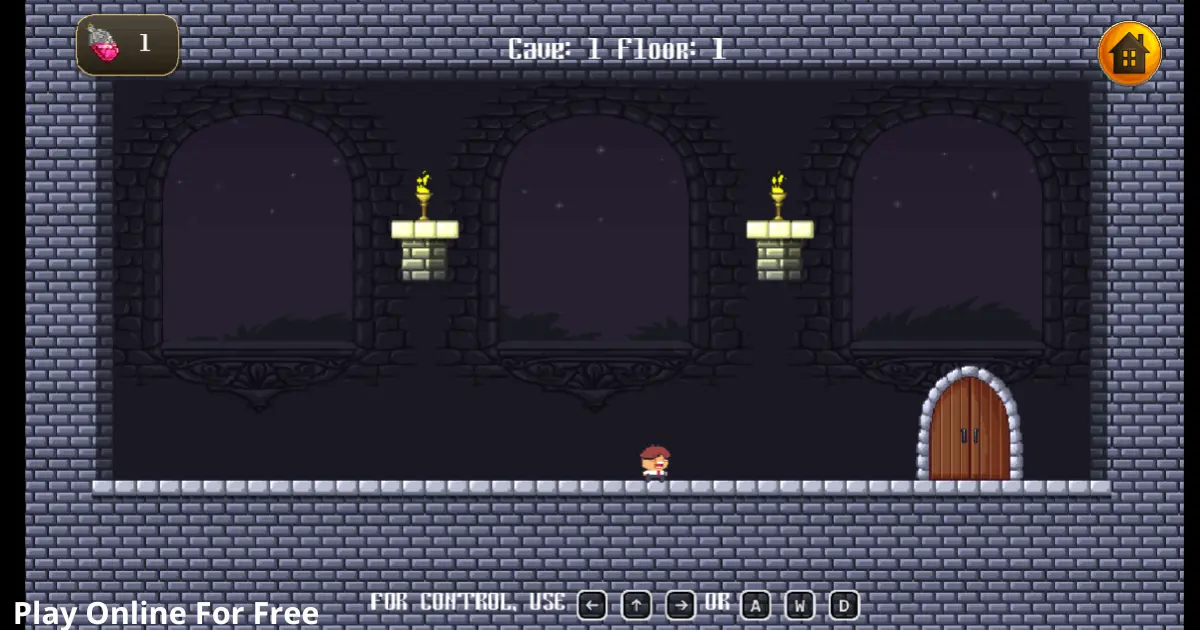
Key Features
- Action pacing that rewards short taps and clean lines instead of constant holding.
- Tight risk-reward decisions, safer routes versus faster lanes with higher danger.
- Quick restarts that encourage learning obstacle patterns and improving consistency.
- Simple controls that still allow high skill expression through timing windows.
- Run-based structure with a clear fail state, one mistake can end the attempt.
- Mobile-friendly layouts in many versions, often playable as a no download experience.
What is Devil’s Road?
Devil’s Road is an action-focused online/browser game built around a repeating loop: move forward, avoid hazards, and stay alive long enough to reach new segments. The tactical dynamic comes from reading what is ahead and choosing whether to slow down for safety or commit to a faster line that leaves fewer escape options.
What makes it stand out is the blend of movement discipline and aim discipline. If you rush every corner, you typically clip hazards. If you hesitate too much, you lose control of pacing and end up boxed in. The best runs balance rhythm, small course corrections, and decisive actions when the route gets messy.
How to Play
Your goal is to survive and progress farther down the road. Most versions treat a collision with a hazard, obstacle, or lethal zone as a run-ending fail state. If the game includes enemies or projectiles, taking a hit may also end the run or force a reset, depending on the build.
Progression usually comes from learning. Early sections introduce basic hazards and wider lanes, then the difficulty ramps by narrowing safe space, increasing speed, or combining two threats at once. Some versions also add light unlocks like cosmetic changes or stage variants, but the core improvement is player skill.
Controls (common layout)
For movement, use A/D or Left/Right arrow keys on Keyboard or Mouse, or swipe or tap left/right on Mobile or Touch.
To jump, use Space on Keyboard or Mouse, or tap the jump button on Mobile or Touch.
To aim, use mouse movement on Keyboard or Mouse, or drag to aim (if available) on Mobile or Touch.
To shoot or perform an action, use Left click on Keyboard or Mouse, or tap the shoot button on Mobile or Touch.
To pause or access the menu, use Esc on Keyboard or Mouse, or tap the menu icon on Mobile or Touch.
Micro cue: If your character “skates” into hazards, stop holding direction and use short taps to re-center.
Micro cue: When you see a narrow gap, aim your movement first, then shoot second, because aim-wiggles can pull you off-line.
Core Gameplay Mechanics
When you push forward and steer through the road, the game continuously tests your timing window: small late inputs usually cause your hitbox to clip obstacles. Quick, early corrections keep you aligned and preserve room to react. If the version includes shooting, firing can trade attention for safety; you clear threats but risk drifting into terrain.
When the route presents a split, treat it as a lane-control problem. Pick the line that keeps two exits open, even if it looks slower, because tight lanes reduce your recovery options. When hazards appear in pairs, commit to avoiding the first hazard cleanly, then immediately reset toward center to avoid getting trapped by the second.
As you advance, patterns typically stack: lanes get narrower, hazard spacing shortens, and the game asks you to combine movement and aim without pausing. The difficulty ramp often feels like speed increases, but it is also about decision density; you must choose a safe line earlier. Long runs reward consistency more than risky bursts.
Key elements are obstacles, lethal zones, and timing gates that punish over-steer. The main fail state is usually a collision, sometimes combined with taking damage from a projectile. If the game tracks distance or score, your run ends the moment you hit a hazard, so protecting your positioning is more valuable than chasing flashy clears.
Strategies
- Center-Reset Rhythm: Steer in short bursts, then return to center whenever the road opens. This works because center positioning preserves two escape lanes when the next pattern spawns. Warning: do not over-correct back to center if the next obstacle is already mid-lane, hold your safe line for one beat.
- Two-Step Gap Reading: Look for the first safe gap, then immediately plan the second. It works because most mistakes happen after the first dodge, when players stop scanning ahead. Warning: if a hazard pair is offset, prioritize the wider second gap, even if the first looks cleaner.
- Shoot Only on Stable Feet: If shooting exists, only fire when your movement is stable and your path is straight. It works because aim adjustments can pull your movement off-line, especially in narrow corridors. Warning: do not tunnel-vision on a target that sits near the edge of a lane.
- Late Jump Ban: Treat jumps as early actions, not panic reactions. This works because a late jump often intersects a hazard hitbox or lands you into the next obstacle. Warning: if you must jump late, reduce side movement during the jump so you do not drift into danger.
- Speed-Toggle Discipline: If the game offers speed boosts or faster lanes, use them only after a clean section, not when the screen is crowded. It works because extra speed reduces your decision time and amplifies small steering errors. Warning: avoid boosts before a known narrow segment.
- Reset With Purpose: After a crash, repeat the same segment 3 to 5 times focusing on one change, like smaller steering taps or earlier jumps. It works because the game rewards consistent muscle memory more than random experimentation. Warning: do not chase “perfect” runs while you are still missing basic timing.
Decision Flow (Quick Win Rule) See a narrow lane ahead? Yes -> Move early -> Short taps only -> Re-center after clearing No -> Any paired hazards soon? Yes -> Plan two gaps -> Clear first cleanly -> Reset to center No -> Maintain steady pace -> Shoot only when stable (if available)
Similar Games
If you enjoy fast-paced action and precision, you might also like these titles:
- SuperHot: Time moves when you move, tactical action with clean shooting decisions.
- Pogo Stick Parkour: Precision landings and rhythm-based movement through tricky gaps.
- Level Devil: Trap-heavy platforming that punishes greedy movement and late reactions.
- Vex-style parkour: Fast runs, spikes, and timing puzzles that reward memorized patterns.
- Level Devil
FAQ
How to play Devil’s game?
You usually play by moving forward, dodging hazards, and aiming for clean lines through each segment. The main rule is simple: avoid collisions and survive longer to reach new sections. If your version includes shooting, use it to clear threats without sacrificing your movement control.
Which is the darkest game in the world?
There is no single official answer because “darkest” depends on theme, content, and player tolerance. Many games explore horror, tragedy, or disturbing topics in different ways. If you want to avoid heavy content, check the game’s page labels and avoid titles described as horror or psychological.
What is the dirty card game called?
Many party card games include adult or “dirty” prompts, but the best-known varies by region and what people have played. Some rely on fill-in-the-blank humor, others are dares or questions. If you are searching, include “adult party card game” to find options appropriate for your group.
What game is called the Devil’s game?
The phrase “Devil’s game” is used informally for different games depending on context and culture. Some people use it as a nickname for gambling-style games, while others mean a specific title with “Devil” in the name. For this page, it refers to Devil’s Road as an action online/browser game.
Technical
Devil’s Road is typically presented as an HTML5 game that runs in modern browsers, and it may use WebGL for rendering effects. Chrome, Firefox, Edge, and Safari generally handle this type of online/browser game well. Most mid-range laptops and phones should run it smoothly, but performance can drop if many effects are enabled.
Controls are usually keyboard and mouse on desktop, and touch controls on mobile. Because it loads in the browser, it is often a no download experience, but saving, ads, and unlocks can vary by portal and version.
Final Verdict
Devil’s Road works best for players who like fast action, quick resets, and improvement through repeatable patterns. Its biggest strength is clarity: you fail, you learn why, and you can immediately test a fix on the next attempt. The limitation is that small input mistakes can end runs, so it may feel punishing if you prefer relaxed pacing.
If you enjoy Devil’s Road, you may also like more io action games. gamexplains.com/io
If you want more aim-forward challenges, explore Shooting. gamexplains.com/shooting
SuperHot: https://gamexplains.com/game/superhot
Pogo Stick Parkour: https://gamexplains.com/game/pogo-stick-parkour
Level Devil: https://gamexplains.com/game/level-devil
Google Play: https://play.google.com/store/apps/details?id=il.azusdex.devils_road&hl=en_US
App Store: https://apps.apple.com/ae/app/super-shoot-red-hot/id1103316023